Showing posts with label Art. Show all posts

July 10, 2011

Beyond beauty : Karmasuthra Jewelry

If you love unusual jewelry that are one of a kind, then Karmasuthra creations are sure to satiate your appetite.Karma Suthra is an eclectic blend of fun, spirituality and vivacity strong together in jewelry.

From time immemorial, India has been well known for it's ancient and rich tradition of jewelry making. Beautifully crafted jewelry worn by everyone, from the Maharajas to the village folk. It is this intrinsic essence of beauty that is captured in the new, timeless, modern design of Karma Suthra jewelry.

Divya Thomas creates one of a kind pieces, using beads and baubles she's collected on her Jamey's to marinas parts of the world. Divya's keen eye for detail and ingenuity create exquisite jewelry. Each individual piece embraces positive vibes which brings peace and happiness to the wearer. 

Divya skilfully combines sterling and pewter with rare and exquisite finds of woods, based and semi precious stones merging the senses and family individual pieces or refined art.I will leave you with pictures...


I had to stop at that! if you want to see more pictures look Karmasuthra Jewelry on Facebook or www.karmasuthra.com and be floored!!!!!!!!!

February 9, 2011

Traditional Arts : Applique Thangka

Artisans from one of our producer groups, The Norbulingka Institute, make these enticing Thangkas - religious scroll pictures.

Appliqué Thangka are religious pictorial scrolls, an important artistic form in the Tibetan Buddhist tradition. Tibetan Buddhist painting is perhaps one of the most complex and sophisticated art forms.  They are detailed and aesthetic; they symbolize the religious, mystical consciousness.

The creation of fabric thangkas, mostly made of silk, some of them woven, some embroidered are made using a technique similar to appliqué, goes back many centuries in Tibet. The appliqué artists at Norbulingka do their finest work when they make silk thangkas. Constructed of hundreds of hand-cut pieces of silk and brocade, these elaborate creations require many months of work.
Fabric pieces cut
Then the fabric pieces are assembled together
Known in Tibetan as göchen thangka (precious-cloth scroll images) or göku (cloth images), these pictures are a patchwork of fine silk satins and brocades. Thangkas were, and still are, painted with mineral colors and gold on a cotton canvas and then framed in silk brocade.
Assembly with horse hair

To start with, a stencil of the desired image is prepared by drawing a full-size image on paper and perforating the lines with a needle. This stencil is placed over the cloth that will form the background and is dabbed with a cloth laden with powdered white chalk to render the drawing visible. The individual figures assembled from silk brocade are stitched onto this background and outlined with silk-wrapped strands of Mongolian horse tail. The completed image is mounted on a plain white cotton backing before finally being framed in a brocade border.


Finished Thangka


The imagery in Tibetan thangka displays a blend of Chinese and Indian influences with characteristically Tibetan elements. The pictures on thangkas usually depict idealized figures which symbolize the expansive qualities of enlightened mind, such as wisdom, compassion, energy, and fearlessness. Some thangkas also illustrate scenes from the life of the Buddha, or occasionally even history. 

Apprentices at the norbulingka institute train to make appliqué thangkas. They become thoroughly familiar with the forms and proportions of Tibetan iconography before learning to mark, cut and sew pieces of silk brocade to assemble brilliant sacred images from them. Hats off to the patience that these guys have for creating such breathtaking pieces!

These beautiful artifacts are available at The Green Elephant by order, customized to your size requirements. If you think this is a must have for your home/office or facility, do give us a shout. We would love to hear from you. 

All images courtesy : Norbulingka Institute

December 28, 2010

The Spanish Art Village

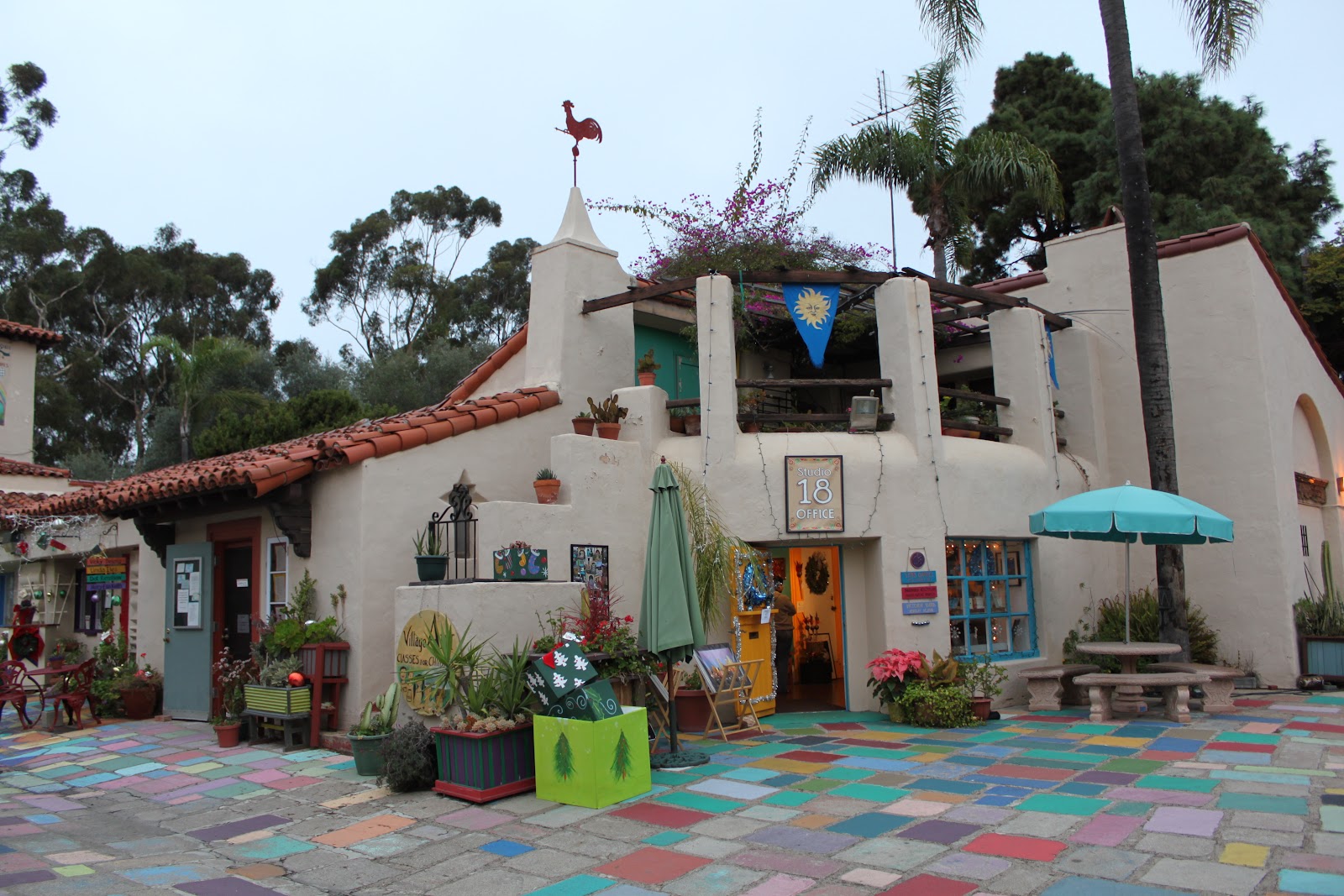
We recently had friends over last week and while we were strolling around at Balboa park, we happened to get escorted by the flowering bougainvilleas and multi-colored cobblestoned courtyard into The Spanish Art Village
Patrons, art lovers or even just curious folks get an opportunity to discover demonstrations of art being made here in this little artist community that hosts over 200 local artists. The quaint buildings and courtyards that make up the Spanish Village Art Center were originally built in 1935 to depict a charming old village in Spain for the second California Pacific International Exposition. One will come across local painters, sculptors, metalsmiths, jewelry designers, clay artists, gourd artists, photographers, printmakers, fiber artists, basket makers, mixed-media artists, glass artists, enamel artists and many more arts all at this one little heaven. It truly was a treat to talk to some of the most beautiful artists and see them create some of the most enticing pieces of art. Although we were not allowed to click pictures of the finished art works, which i totally understand, sharing some images of the courtyard and an artist at work. 
Our youngest visitor and art enthusiast sat through one of the artists painting demonstration and bought his work for her own room. How thrilled she was about her shopping that day! :)
I think we spent about three hours right here that day. It was an enticing experience and i look forward to some of the classes they host to teach various forms of art to enthusiasts like me :). This artist here says that he has been painting since the age of 9 and has been living by it since!

December 3, 2010

Design Feature - Achyut Palav's Calligraphy Art


Today, we bring you Achyut Palav's Calligraphy art. 
Wikipedia definition of calligraphy says its a from of visual art often called 'the art of fancy lettering'.  

Ahyut Palav - Stiftung Archive 1

Palav has worked in diverse mediums and on different concepts. He works with various scripts & languages from around the world, his fondness leaning towards the Indian scripts mainly the Devnagri script. He is a graduate of Art from Sir J.J. Institute of Applied Art, Mumbai. His work has found place in collections with the likes of Stiftung Archive & A.G Art Gallery - Germany. 


Calligraphy Mugs
Moscow Paintings
The story of aesthetic writing has evolved many fold since ancient times. Back then calligraphy was framed within the limitations of technical skills, material availability, time and place. It was used to bolt certain sacred inscriptions or information of utmost value on mediums like palm leaves, stone, bamboo, cloth or anything that was conveniently available at that time. To much contrast, modern calligraphy ranges from functional hand-lettered inscriptions and designs to mere fine-art pieces where the abstract expression of the handwritten mark may or may not compromise the legibility of the letters. With the advent of technology, today there are no limitations that bind the artist - the results can be unimaginable and beautiful! 

Who can say black and white is boring? It's anything but that right? 
Now this is creative... Mozart in Calligraphy

Mozart Portrait using Calligraphy

November 17, 2010

Settle down, drink, eat. Lather, rinse, repeat - Mondys @ Mumbai

Cafe Mondegar, also popularly know as 'Mondys' to regulars, is one of the coolest hang outs in Mumbai! On our recent trip back to India, that's where we'd go to cool off from the harsh Mumbai heat! It's warm ambiance - the cool wall cartoons, the popular juke box (that has endless replays of the Eagles song 'Hotel California') and a pitcher of chilled Indian beer... mmmm heaven! 
Mondegar stands at the lip of Colaba Causeway  (a heaven for street side shoppers!) offering blessed refuge to anyone too lazy to bother wading down the entire stretch and being crawled upon by hagglers to sell you cheap stuff. Mondys is more of an all-day cafe than bar; in fact, its alcohol selection is restricted to a selection of beers and now wine. So get a cold one (or a pitcherful of cold ones if you’re in it for the long haul) and soak in the downtown Mumbai buzz. You'l have to squeeze yourself into one of the sardine-like tables and revel in the cafe’s relatively untouched and unchanged interiors, especially the giant mural (loosely about a day in the life of a bustling cafe in Mumbai) by legendary Indian illustrator Mario Miranda


Historee

The Yezdegardis, an Irani family, bought the home of a French sailor named called Monsieur Monde in 1925. Inspired by its Hindi reference ‘Monde Sahib ka Gar’ (Mr. Monde’s house) the Yezdegardis soon converted it to a café called ‘Monde-Gar’. It started off as a typical teahouse that also sold tobacco, foreign liquor, wine, breads and specialties from Iran like saffron, almonds, and pistachios. In time the Yezdegardis have developed an assorted menu influenced by Irani flavors. And today, you can choose from a variety of food, everything from kebabs to burgers, bruschetta, chow-mein, grills, and sizzlers. But through the ages, the house favorite has always been the Pepper Steak or Steak Boti. My personal favorite... the caramel custard, yummm!

Enjoy some of the snap shots i took this last visit to India. Am sure you'l notice the humor in each of the illustrations! Visit my flickr page at http://www.flickr.com/photos/amishadesai/5182115683/ for more pics of Mondys. 

The Bar 

"Apple of my eye, Ms. Big Boobs!"

The Taj Mahal


Mondys is among the last of its breed -- the perfect hybrid of Mumbai’s fast-dying Irani restaurants (chequered table-cloths? Check. Netted chairs? Check) and beer bars. Because it’s been there forever. But most of all, because it’s the sort of place you can buy a beer at noon in without feeling guilty. And god knows every city needs more of those. 
Related Posts Plugin for WordPress, Blogger...